
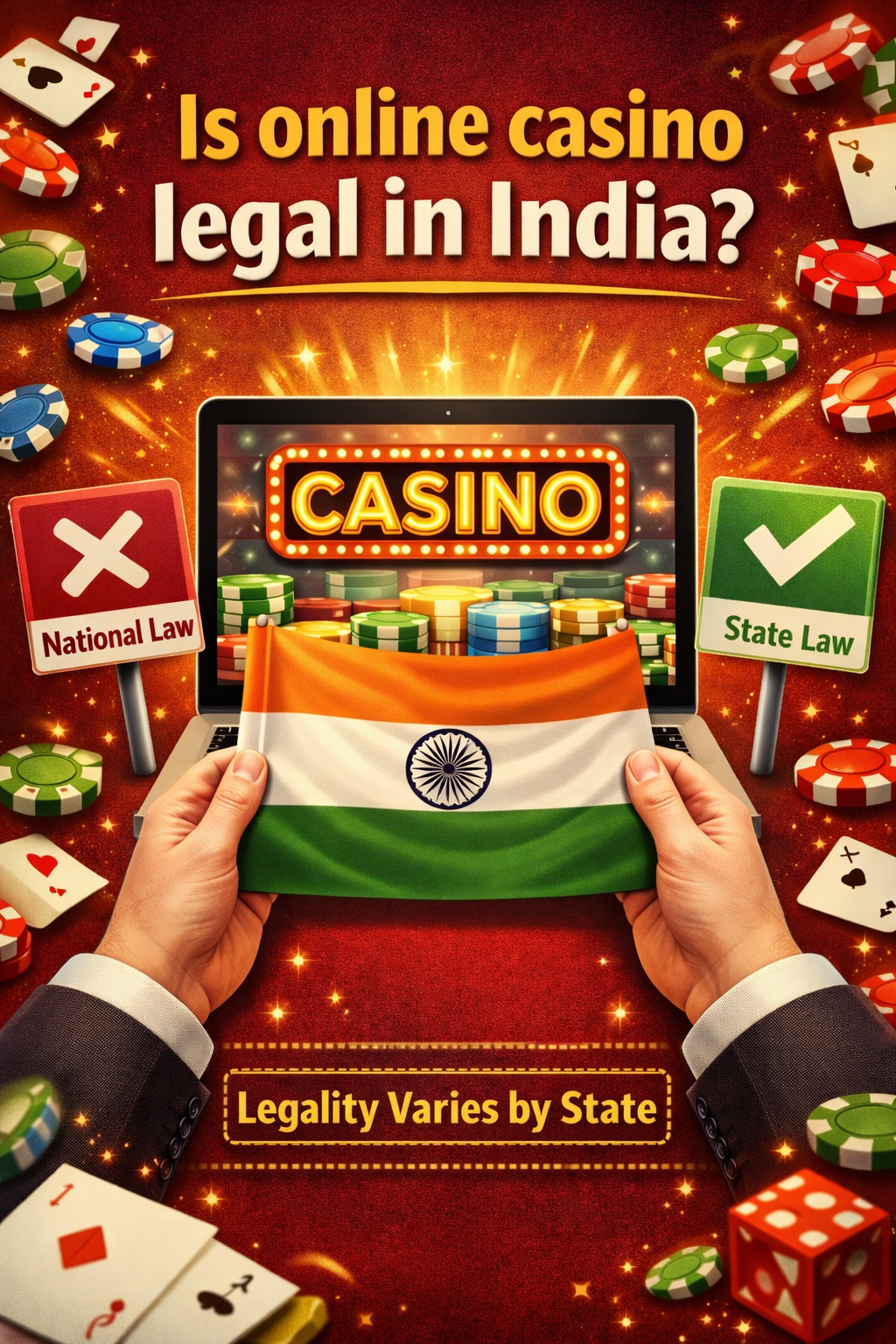
If you have ever sat down to play a quick round of Blackjack or spin the slots from your phone while in India, you have probably had that thought that: “Is this actually allowed?”
The question of online casino legality in India is one of the most debated topics in the country’s digital space. As we move through 2026, the landscape has shifted dramatically from the “gray area” of previous years into a much more regulated, and in many ways, stricter environment.
The New Legal Reality: The 2025 Act
For decades, the primary law governing gambling in India was the Public Gambling Act of 1867. Because it was written before lightbulbs were common let alone smartphones it didn’t even mention the word “internet.”
This created a loophole where many argued that since there was no specific law against an online casino, they were effectively legal. However, in late 2025, the central government passed the Promotion and Regulation of Online Gaming Act.
This landmark law has fundamentally changed the game:
- The End of the “Skill” Loophole: Traditionally, games like Rummy and Poker were protected because they were considered “skill-based.” The new 2025 law largely collapses this distinction for money-based games. If there is a cash stake involved, it is now subject to intense federal oversight.
- National Licensing: The Act established the National Online Gaming Commission (NOGC). Only platforms with an official license from this body are technically authorized to operate, advertise, or collect deposits within India.
Is a Casino Legal in India? (The State-by-State Breakdown)
Even with a federal law, “betting and gambling” remain state subjects under the Indian Constitution. This means your physical location determines whether online casino legality in India applies to you.
- The Regulated Hubs: States like Sikkim and Goa have their own specific frameworks. Sikkim remains a pioneer, offering licenses for online casino games and sports betting within its jurisdiction.
- The Prohibited Zones: If you are in Telangana, Andhra Pradesh, Tamil Nadu, or Karnataka, the rules are much tougher. These states have passed specific legislation to ban all forms of online money games, often carrying penalties for both operators and players.
- The Offshore Challenge: Many players still access international sites based in Malta or Curacao. While these aren’t “illegal” under international law, the Indian government has gained significant powers to block these sites and restrict Indian banks from processing their payments.
Taxation: What You Need to Know
Even if you find a legal way to play, the taxman is now an uninvited guest at every table. In 2026, the tax rules are very clear:
- GST at the Entry: There is a 28% GST levied on the full face value of your deposits. If you deposit ₹1,000, a significant portion goes to tax before you even place your first bet.
- TDS on Winnings: Under Section 194BA, a flat 30% TDS (Tax Deducted at Source) is applied to your “net winnings.” This is deducted the moment you withdraw or at the end of the financial year.
Pros and Cons of Playing in 2026
Pros:
- Enhanced Safety: Licensed platforms now require mandatory features like deposit limits, self-exclusion tools, and age verification via DigiLocker.
- Fair Play: With the NOGC monitoring software, the risk of “rigged” games on licensed platforms is significantly lower.
- Dispute Resolution: You finally have a legal body to complain to if a casino refuses to pay out your legitimate winnings.
Cons:
- Heavy Taxation: Between the GST on deposits and TDS on winnings, it is much harder to come out “ahead” financially.
- Banking Hurdles: Many major Indian banks now automatically block transactions to sites that do not hold a valid Indian license.
- Strict Penalties: The new law classifies illegal money gaming as a cognizable and non-bailable offense for providers.
The Final Verdict
So, is an online casino legal? The “Wild West” days are over. India has moved toward a model that prioritizes consumer protection and tax revenue over a free-for-all market.
While you can still enjoy these games on regulated platforms, the costs are higher and the rules are tighter. Before you sign up, the most important thing you can do is check if your specific state has a ban in place.